
Solar or Mains? Powering a Garden Fountain
18 October 2026 · Just Fountains · Buying Guides
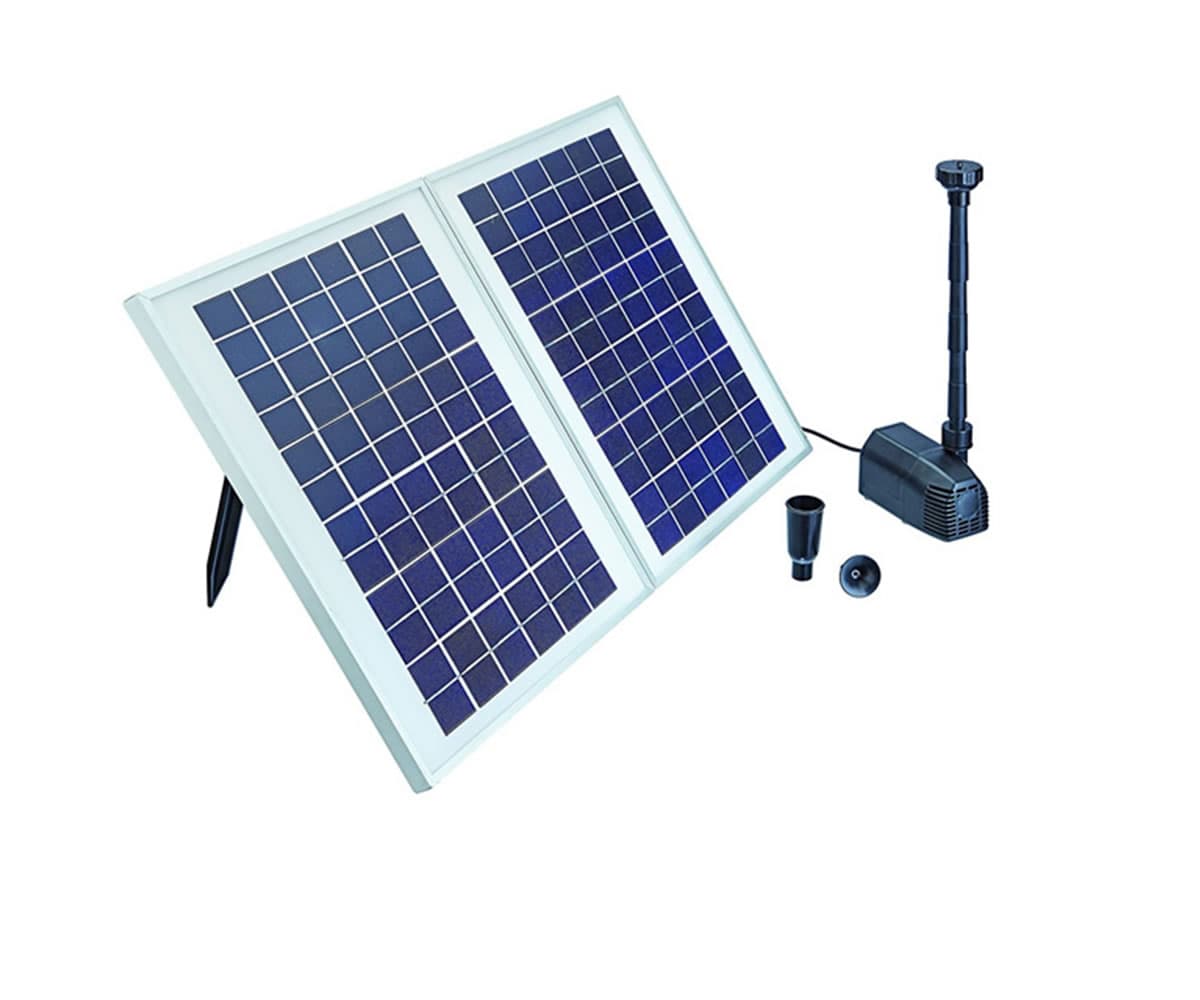
The appeal of a solar pump is obvious: no cable to run, no electrician, nothing added to the electricity bill. The question is what you give up, and the answer is control over when the fountain runs.
What a mains pump gives you
Consistency. It runs when you switch it on, at the same rate, at nine in the evening in November as readily as at noon in June. If you want a fountain that is simply on, or one you can run while you are sitting out after dark with the lights on it, mains is the straightforward answer.
The costs are an outdoor socket if you do not already have one — which is work for a qualified electrician — the cable run, and the electricity itself. Fountain pumps are modest consumers, but a pump left running continuously does add up over a season.
What a solar pump gives you
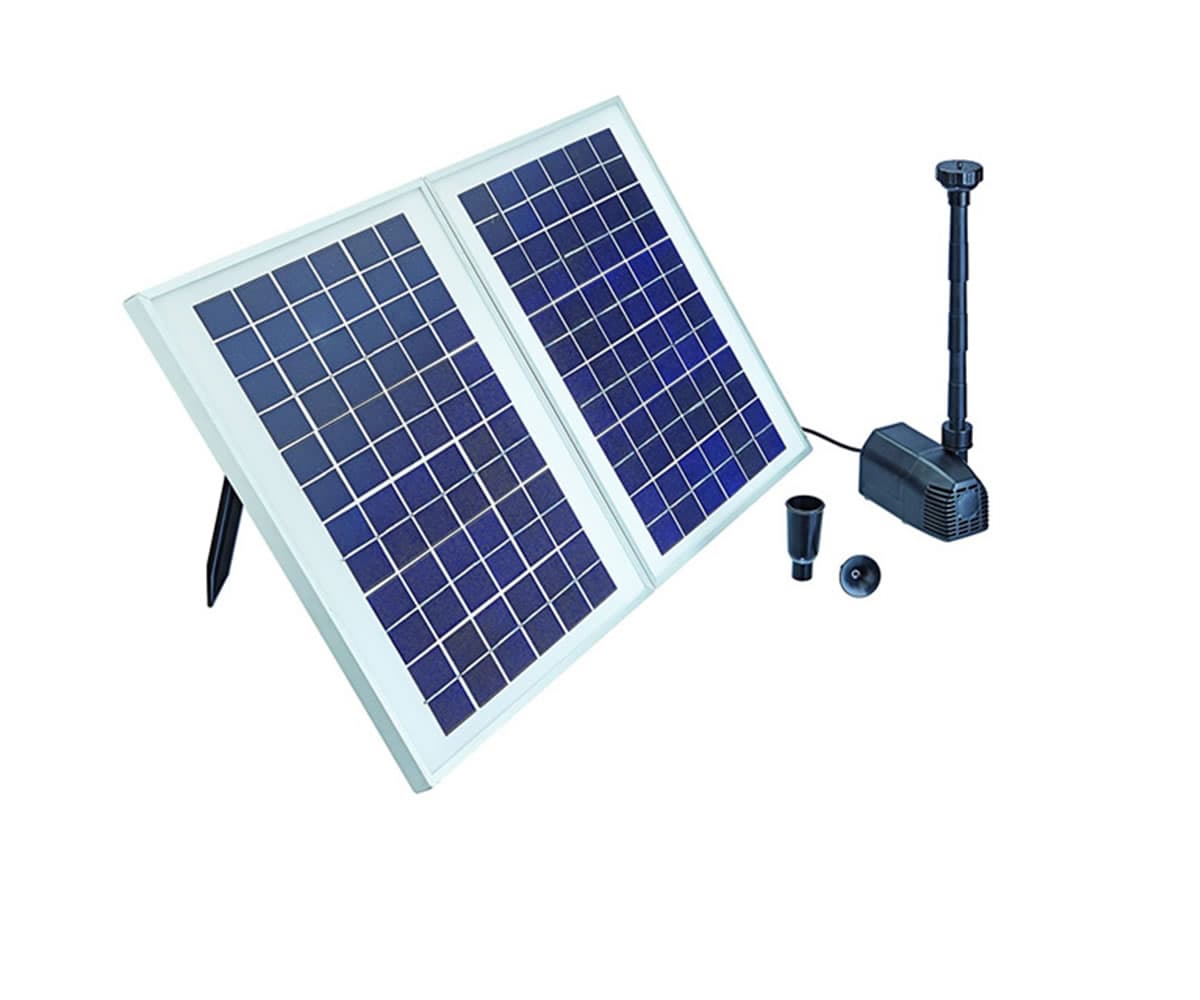
Freedom from all of that. A solar pump comes with a panel and runs the fountain directly from it, so there is no trench, no socket and no running cost. It also means you can put a water feature somewhere that has no realistic chance of getting power — the far end of a garden, an allotment, a courtyard with no outdoor supply.
The trade-offs are real and worth being plain about:
- It stops when the light goes. A basic panel-driven pump runs when the sun is on the panel and slows or stops when a cloud crosses. In British weather that means a fountain that comes and goes.
- Nothing after dusk. Unless the system includes a battery, there is no evening running — which for many people is exactly when they would want it.
- The panel needs sun, not the fountain. The panel can usually be sited separately on a lead, which helps, but it does need a genuinely sunny position and keeping clear of leaves and dust.
- Winter is quiet. Low sun and short days mean very little running from November to February.
- Flow is lower. Solar pumps generally move less water than the mains equivalent, which limits how tall a feature they can supply.
Flow rate is the number that matters
Pumps are rated in litres per hour, and ours come in 250 LPH, 600 LPH and 1600 LPH. The rating has to suit the feature, not the other way round: a pump has to lift water to the top of the piece and still have enough flow left to look like something when it gets there. The taller the fountain, the more the lift costs you.
As a rule of thumb, the small ratings suit pebble pools, bowls, millstones and self-contained features where the water only rises a little. Tall tiered fountains need considerably more, and are usually better on mains.
Which fountains suit solar
Solar works best where the water does not have far to travel and the effect does not depend on a strong plume:
- pebble pools and bubbling features at ground level;
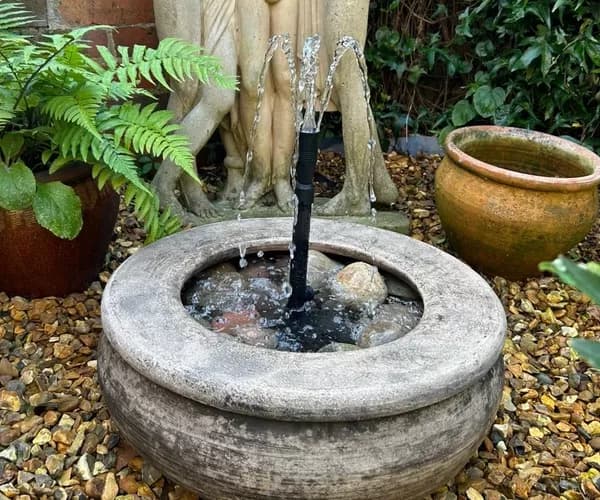
- millstones and bowls with a gentle dome of water;
- small self-contained features on a patio;
- wildlife-focused features, where a slow trickle is the point.
It suits a tall multi-tiered fountain considerably less well, because the amount of lift and the plume both depend on flow the panel struggles to supply.
The practical middle ground
If a cable is possible but awkward, it is usually worth doing once and properly. If it is genuinely not possible, solar turns a non-starter into a working water feature, and a bubbling pebble pool running happily on sunny afternoons is a great deal better than an empty corner.
And if the attraction of solar was mainly the running cost, there is a third option: a mains pump on a timer or switch, run for a few hours when you are actually outside. That gives you the certainty of mains with most of the saving.
You can see our solar pumps in the three flow ratings, and the full range of pumps, liners and lighting on the pond liners, pumps and lights page. For how a pump behaves once it is in, see why your fountain is not flowing properly.
The product in this post
Related posts
18 October 2026
The Sound of Water: How to Get a Trickle Rather Than a Splash
Two fountains the same size can sound completely different. Drop height, flow and the surface the water lands on matter far more than the model name.
1 October 2026
Small Patio Fountains Under £200: What You Actually Get
Seven pieces at the bottom of the range, and the honest account of what they do well and what they do not. Who they suit, how much water they hold, and how to make a small fountain look deliberate rather than apologetic.
1 October 2026
A Fountain for Wildlife: Birds, Bees and Frogs
Moving water brings in more wildlife than a still bowl ever will, but only if an insect can land on it and a hedgehog can get back out. The small details that turn a water feature into something the garden actually uses.