
A Fountain for Wildlife: Birds, Bees and Frogs
1 October 2026 · Just Fountains · Buying Guides · wildlife gardening, garden fountain, water clarity
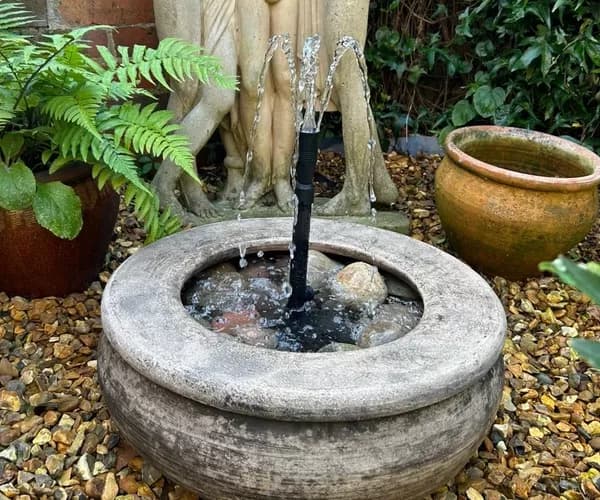
Put a fountain in and you will notice the birds within a fortnight. Moving water carries further than still water — birds find it by sound as much as by sight — and a garden with running water in it gets visitors that a garden with a water butt does not.
That happens on its own. What does not happen on its own is making the water genuinely usable, and that comes down to a handful of small details, most of which cost nothing.
The one that matters most: a shallow edge
Almost every wildlife problem with a water feature is the same problem. A steep-sided pool with deep water and a smooth rim is, from the point of view of a bee, a sheer cliff above a reservoir.
Wildlife needs somewhere to stand in the water, not just reach it:
- Small birds will not use water they cannot stand in. They want a shallow, gently sloping place where the water is a centimetre or two deep.
- Bees and wasps drink a surprising amount in hot weather, and they drown easily. They need a dry landing surface right at the waterline.
- Hedgehogs can swim but cannot climb a smooth vertical face. A hedgehog that gets into a pool and cannot get out will drown in it.
The fix for all three is the same, and it is free. Put a few flat stones or a pile of pebbles in the pool, arranged so they break the surface and slope down into the water. Shallow standing for the birds, dry footing for the bees, and a ramp out for anything that falls in. Ten minutes, no cost, and it is the single most useful thing on this page.
Decorative stones do the job and look like a decision rather than an afterthought.
Which features suit wildlife best
Any fountain can be made to work with the stones trick. Some need less help:
- Pebble pool fountains are the best of the lot. Water bubbles up through stones with no open water at the surface — nothing can fall in, bees land on wet pebbles, and small birds bathe at the edges. It is also the safest arrangement around small children.
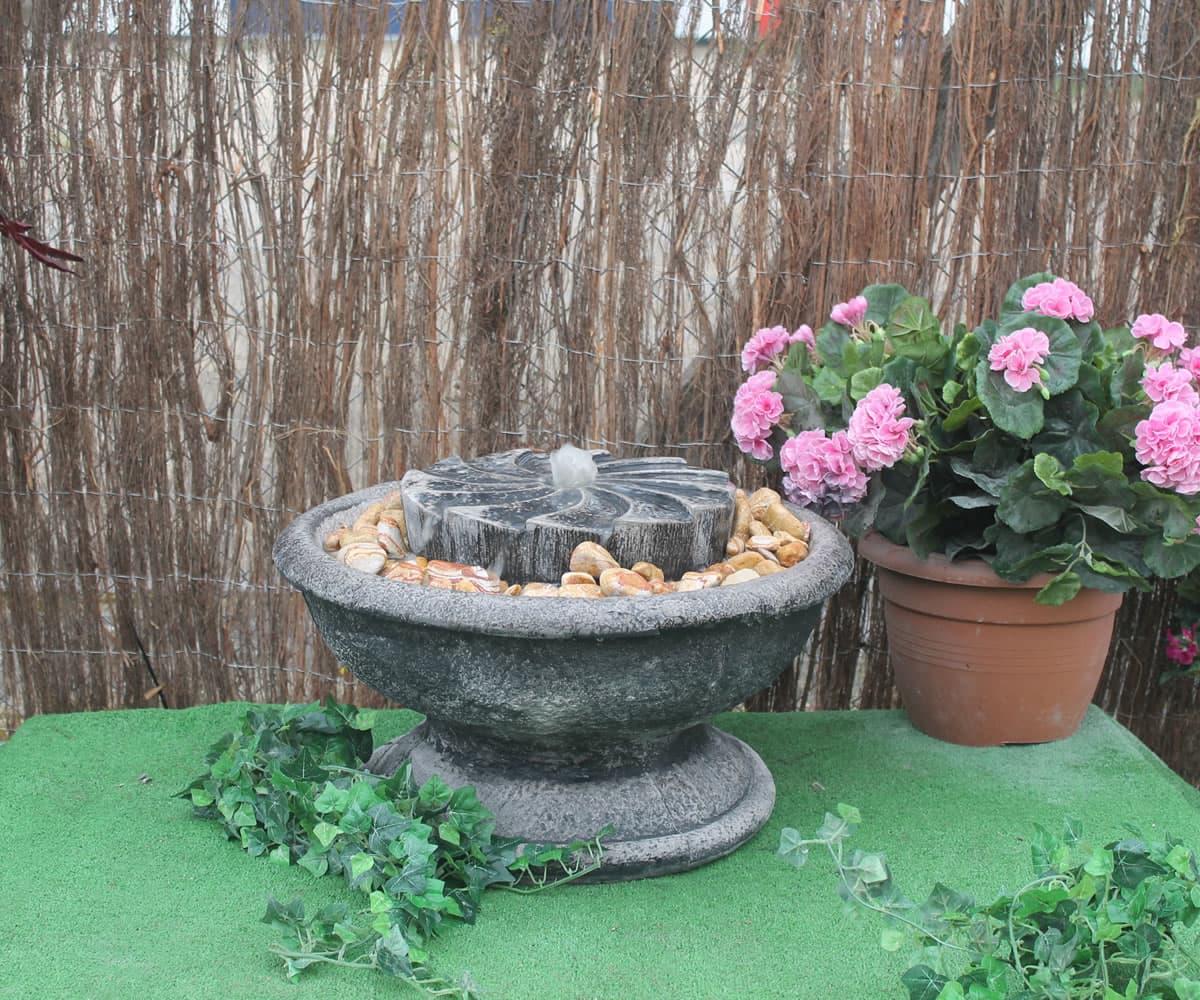
- Millstone fountains work the same way: water over a stone face, draining back through a hidden reservoir.
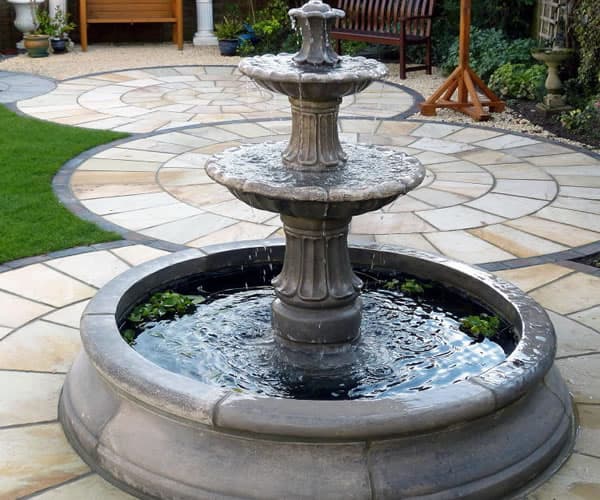
- Tiered fountains with pool surrounds are excellent once you add stones, because the upper tiers hold a shallow film of water that birds use constantly — often in preference to the pool below.
- Deep fibreglass pools need the most help. Add a ramp, and floating lilies give insects somewhere to land mid-water as well as shading the surface.

Where to put it
Birds bathing are wet and distracted, which makes them easy prey. They will use a fountain far more if it is sited with that in mind:
- Open enough to see out from — not tucked against dense cover a cat can hide in.
- With an escape route close by — a shrub or small tree a couple of metres away, so there is somewhere to bolt to.
- Not directly under a feeder, where husks and droppings foul the water.
- Where you can see it, because watching is most of the pleasure.
Keeping the water fit to drink
This is where wildlife changes the maintenance advice. A fountain that something drinks from is not a swimming pool to be sterilised.
- Top up with plain tap water, regularly. Fresh water does more for clarity than anything you can add.
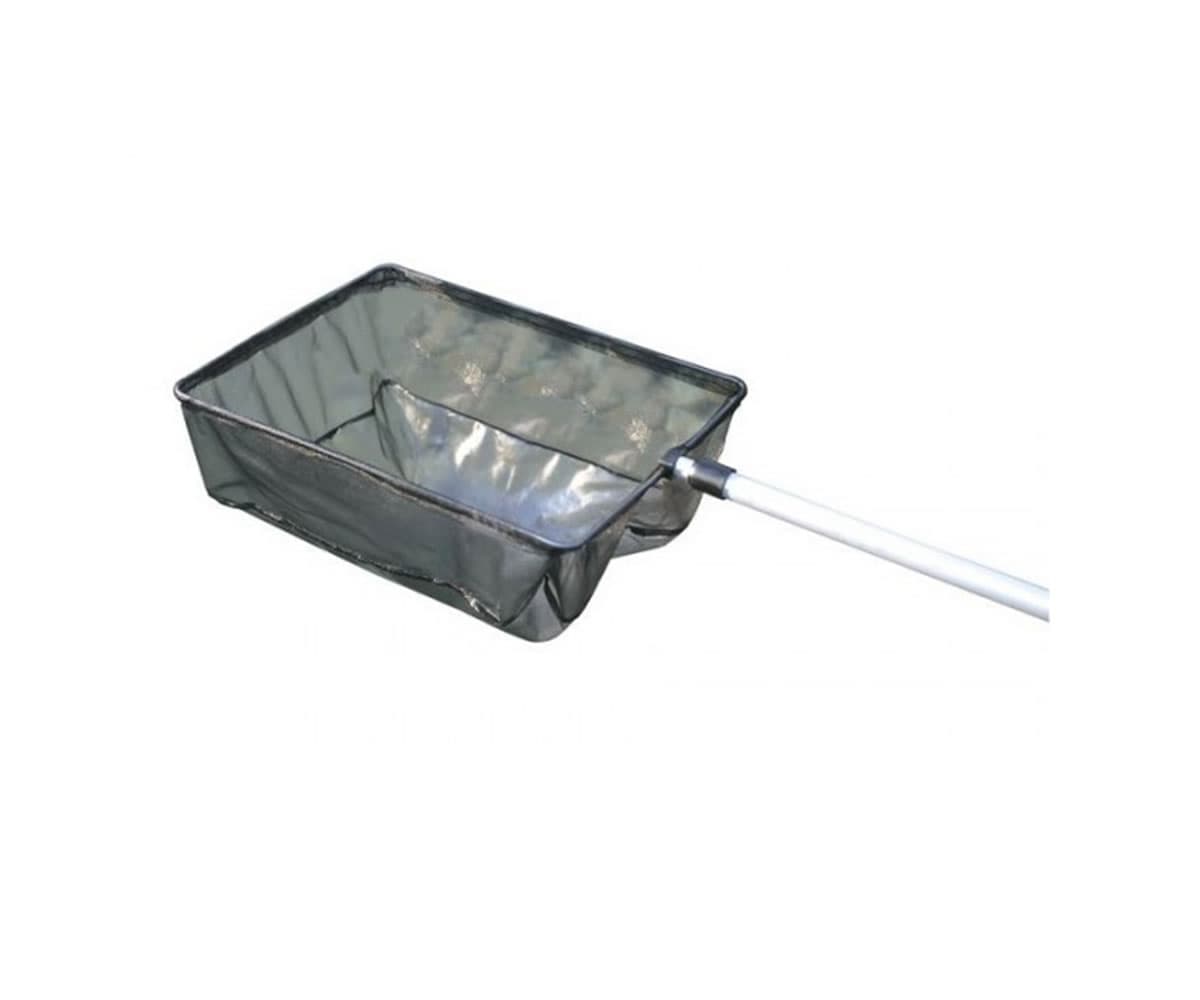
- Prefer the mechanical answers — a debris net, a stiff brush, a sludge vacuum — over the chemical ones. Our post on keeping fountain water clear goes through both.
- Never bleach, disinfectant or household descaler.
- Never salt, antifreeze or glycerine to stop it freezing. They are poisonous to birds, and they do not work the way people hope.
- A little green is fine. Algae is not harmful to the wildlife using it, and a spotless fountain is not the goal.
Summer and winter
In a hot dry spell a fountain may be the only reliable water for some distance, and that is exactly when a small reservoir drops fastest. Check it every few days through July and August — it matters more than at any other time of year, and it protects the pump at the same time.
In winter the fountain comes down: switch off, lift the pump out, drain every bowl before the first hard frost, because water left to freeze in cast stone can crack it. But the birds still need water, and frozen ground means they need it more.
A shallow dish put out each morning with fresh water, and emptied each evening so it does not freeze solid, covers the gap. It is a minute a day through the worst of the winter, and it is probably the most useful minute you will spend in the garden.
What turns up
Give it a season. Blackbirds and sparrows first, usually within days. Then the smaller birds once they have watched the others do it. Bees from the first warm spell. Frogs find anything with water in it eventually, and will use a pool surround as a staging post even though they cannot breed in moving water.
None of it needs encouraging beyond the stones and the topping up.
Browse the self-contained fountains or the small patio fountains, and see what other people have in their gardens in our customer gallery. Prices include delivery to most mainland UK postcodes.
The product in this post
Related posts
1 October 2026
Small Patio Fountains Under £200: What You Actually Get
Seven pieces at the bottom of the range, and the honest account of what they do well and what they do not. Who they suit, how much water they hold, and how to make a small fountain look deliberate rather than apologetic.
1 October 2026
Keeping Fountain Water Clear: Algae, Clarifiers, Filters and Nets
Green water is normal, not a fault, and it is mostly solved by where the fountain sits and how often you top it up. What to do first, what the clarifiers and filters are for, and the three things never to put in a fountain.
1 October 2026
Easy Assembly Fountains: What “No Builders, No Foundations” Actually Means
Our easy assembly range is designed to be put together by two people in an afternoon, with no mortar, no concrete and nobody in a van. Here is exactly what the job involves, and the one step that decides whether it looks right.