
Keeping Fountain Water Clear: Algae, Clarifiers, Filters and Nets
1 October 2026 · Just Fountains · Care & Maintenance · water clarity, algae, fountain maintenance
Every fountain goes green at some point. It is not a fault in the stone, it is not something you have done wrong, and it is not a sign that the pump has failed. It is algae, and algae needs two things: light and nutrients. A pool of water outdoors in June has plenty of both.
The useful thing to understand is that nearly all of this is won before you reach for a bottle.
Start with the three free fixes
- Shade. A fountain in full sun from dawn to dusk will green up faster than one with afternoon shade, every time. If you have not sited it yet, this is worth a thought; if you have, a plant casting some shade across the pool in the afternoon does real work.
- Keep leaves and blossom out. Organic matter rotting in the water is the nutrient supply. Every leaf you take out in October is algae you do not grow in May.
- Top up regularly. As water evaporates, everything dissolved in it concentrates. Topping up with fresh water dilutes the feed, which is why a well-watched fountain stays clearer than a neglected one with the same amount of sun.
Most people who complain about green water are not doing one of these three, and fixing it is free.
Getting the solids out
Algae is the green you can see; sludge is the brown underneath it, and it is what feeds the green. Three things help.
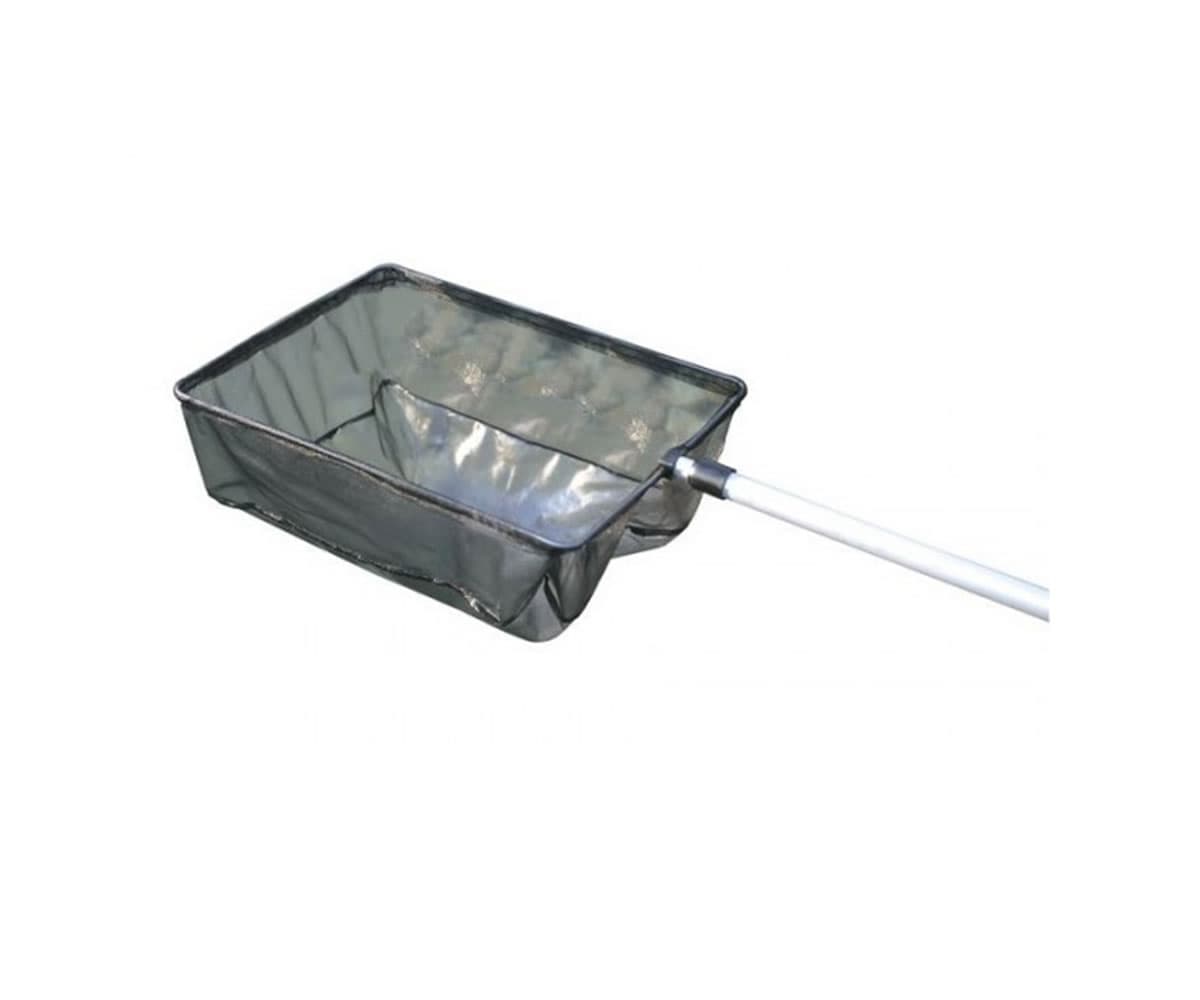
- An algae and debris net over the pool from October to leaf-fall’s end. The single most effective item here, and the cheapest.
- A fountain pool sludge vacuum for lifting the silt off the bottom of a larger pool without draining it.
- A stiff brush and plain water for the green film on the stone itself. It comes off. No detergent — residue ends up in the water.
Never use a pressure washer on cast stone. It strips the hand-applied finish off in seconds and leaves a pale patch that will never match the rest. This is the most common way a good finish gets permanently ruined, and it is always done with the best intentions.
Filters and clarifiers
If the basics are covered and the water still will not clear, there are two products worth knowing about.
- Water filter cleaner keeps the pump’s own filter working. A clogged filter means less circulation, and still water goes green faster than moving water. Half the “my clarifier is not working” cases are really a blocked filter.
- Fountain clarifier clumps the fine suspended particles that make water cloudy rather than green, so they settle or get caught by the filter. It is for cloudiness, not for the green film on the stone.
Two cautions. Follow the stated dose rather than improving on it — double is not twice as good. And bear in mind what drinks from your fountain: birds, bees and, in a lot of gardens, a hedgehog. If wildlife uses yours, lean on the mechanical answers and treat the chemical ones as the exception. There is more on this in our post on a fountain for wildlife.

Blue water dye, and what it is actually for
Our blue water dye is, as the name says, for fibreglass products only. It tints the water in a dark fibreglass pool so the feature reads as water rather than as a dark hole, and it reduces the light reaching the algae.
It is not a treatment, and it should not go into a cast stone pool, where it can stain. If you want the effect in stone, decorative stones in the base of the pool do more for the look than anything you can pour in.
Hard water and the pale bloom
If you are in a hard water area you will get a chalky deposit where the water runs. That is limescale, not algae, and it will not respond to any of the above. It is normal and a lot of people come to like it.
If it bothers you, a weak white vinegar solution and a brush will shift it — test somewhere out of sight first, because it can lighten the finish. Never bleach, and never a household descaler, in a bowl that something will drink from.
While you are at it, the pump
Water quality and pump health are the same subject. Whatever is in the water passes through the pump several hundred times a day. Lift it out two or three times a season, rinse the filter cage, and clean the impeller with an old toothbrush — switching off at the mains first, every time.
If one is badly scaled or has been left a few seasons, our pump cleaning service costs considerably less than a replacement.
Three things never to put in a fountain
- Household bleach or disinfectant. Harmful to wildlife and hard on the finish.
- Salt or antifreeze to stop it freezing. It does not work the way people hope and it is poisonous to birds. Drain it instead.
- Pond treatments dosed for a pond. A fountain pool holds a fraction of the volume. Dose for what is actually in it.
See the full range on our pond liners, pumps and lights page, or browse fountain upgrades and extras. Prices include delivery to most mainland UK postcodes.
The product in this post
Related posts
1 October 2026
A Fountain for Wildlife: Birds, Bees and Frogs
Moving water brings in more wildlife than a still bowl ever will, but only if an insect can land on it and a hedgehog can get back out. The small details that turn a water feature into something the garden actually uses.
1 October 2026
Easy Assembly Fountains: What “No Builders, No Foundations” Actually Means
Our easy assembly range is designed to be put together by two people in an afternoon, with no mortar, no concrete and nobody in a van. Here is exactly what the job involves, and the one step that decides whether it looks right.
1 October 2026
In-Ground Fountains: Setting a Pool Surround into the Ground
A single pool surround sunk so its rim sits flush with the lawn looks as though it has always been there. What the digging involves, how to get it level and keep it level, and when you should not do it.